
What is a VPS? A Beginner's Guide
 By:
By: Table of Contents
Quick Answer
Bottom line: A VPS is a virtual server that gives you dedicated resources (CPU, RAM, storage) on a shared physical machine. It offers much better performance and control than shared hosting, but requires more setup and technical knowledge.
| Best Short Answer | A VPS is your own virtual server with dedicated resources. |
|---|---|
| Most Important Benefit | Better performance and control than shared hosting |
| Main Tradeoff | More technical setup and management |
| Best For | Growing websites, apps, developers, game servers |
| Not Ideal For | Complete beginners who want zero setup |
What Does a VPS Mean?
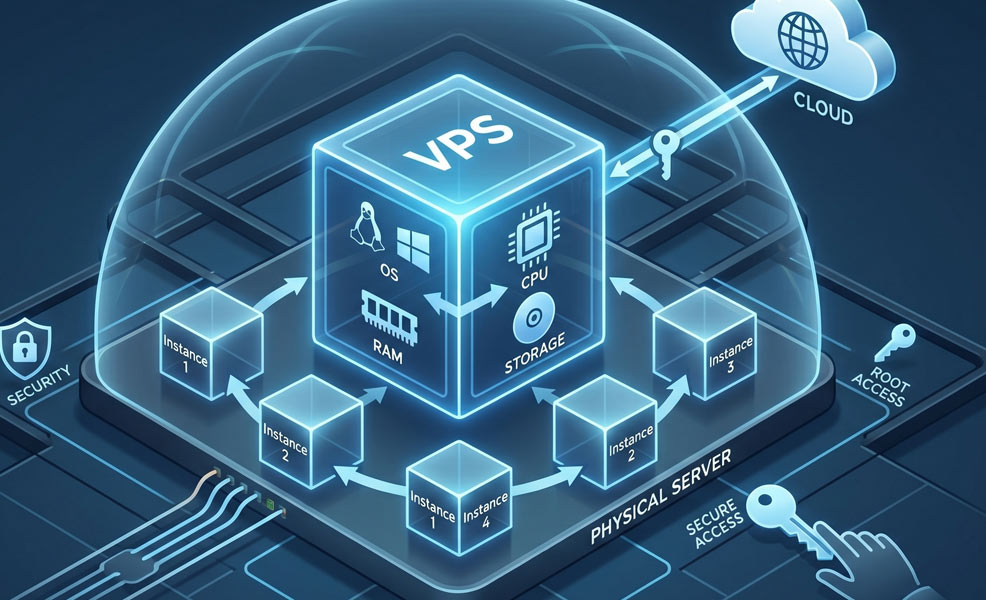
A Virtual Private Server (VPS) is a virtual machine that runs on a physical server but behaves like its own independent server environment. Instead of sharing everything with other users (like in shared hosting), a VPS gives you a defined portion of resources such as CPU, RAM, and storage.
Think of it like an apartment building. With shared hosting, everyone shares the same kitchen and bathroom. With a VPS, you still live in the same building, but you have your own private apartment with your own space and resources.
Simple Definition
A VPS is a virtual server that gives you dedicated resources and control without needing a full physical server.
Real-World Example
If you run a WordPress site or game server, a VPS ensures your performance isn’t affected by other users on the same hardware.
Why It Matters
- Performance: Your site won’t slow down because of other users.
- Cost: Much cheaper than a dedicated server.
- Control: Full root access lets you install anything.
- Scalability: Easy to upgrade resources.
- Risk: Requires setup, and misconfiguration can cause issues.
How It Works
In Shared Hosting
All users share the same server resources, which can lead to slowdowns.
In VPS Hosting
The server is split into isolated virtual environments using virtualization technology. Each VPS acts like its own server.
In Cloud Hosting
Cloud VPS systems spread resources across multiple machines, improving reliability and scalability.
Comparison Table
| Option | How It Works | Best For | Main Tradeoff |
|---|---|---|---|
| Shared Hosting | All users share one environment | Beginners | Poor performance consistency |
| VPS | Virtual isolated server | Growing sites | More setup required |
| Cloud VPS | Distributed virtual servers | Scalable apps | Complex pricing |
| Dedicated Server | Full physical server | High performance | Expensive |
Important: A cheap VPS can still perform worse than premium shared hosting if it’s underpowered or poorly configured.
Pros and Cons
Pros
- Dedicated resources
- Better performance
- Full control (root access)
- Scalable
- Flexible for many use cases
Cons
- Requires setup and management
- More expensive than shared hosting
- No built-in support in many cases
- Security is your responsibility
- Can be overwhelming for beginners
Who It’s Best For
Best For
- Growing websites
- Developers
- Game servers
- Self-hosted apps
Not Ideal For
- Complete beginners
- Simple blogs
- Users wanting zero setup
- People needing full support
Common Mistakes to Avoid
Choosing Too Small a VPS
Underpowered servers lead to poor performance.
Ignoring Security
Leaving SSH open or not updating software can be risky.
Overpaying for Specs
Many users buy more resources than they need.
Expecting Managed Support
Most VPS providers don’t manage your server for you.
Recommended Provider Types
| If You Need... | Look For... | Examples |
|---|---|---|
| Cheap VPS | Low-cost plans | Hetzner, OVHcloud |
| Developer VPS | APIs and simplicity | DigitalOcean, Vultr |
| Cloud ecosystem | Scalable infrastructure | AWS, Google Cloud |
Compare VPS Providers
Find the best VPS based on performance, price, and ease of use.
Final Verdict
Final takeaway: A VPS is the best middle ground between shared hosting and dedicated servers. It offers strong performance and flexibility, but requires some technical knowledge.
If you’re serious about performance, scalability, or running custom applications, a VPS is often the best choice. But if you just want a simple website with no setup, shared hosting is still easier.
Frequently Asked Questions
Is a VPS better than shared hosting?
Yes for performance and control, but it requires more setup.
Do I need technical knowledge for a VPS?
Usually yes, unless you use a managed VPS service.
How much does a VPS cost?
Typically $5–$50/month depending on specs.
Can I host a website on a VPS?
Yes, VPS hosting is commonly used for websites and apps.
Is VPS good for beginners?
Only if you’re willing to learn basic server management.