
Our Namecheap Review & Analysis for 2026
 By:
By: Table of Contents
- Quick Facts
- What Is Namecheap?
- Plans, Pricing, and Overall Value
- Performance and Speed
- Ease of Use and Setup
- Developer and Advanced Features
- Security, SSL, and Backups
- Customer Support
- Scalability and Flexibility
- Data Centers and Global Reach
- Who Is Namecheap Best For?
- How We Evaluated Namecheap
- Scoring Breakdown
- Top Alternatives
- Final Verdict
- Frequently Asked Questions
Pros
- Very low introductory pricing on shared hosting and low-cost entry points across several product categories
- Broad hosting lineup including shared, VPS, managed WordPress, reseller, and dedicated options
- Convenient for users who want domains, DNS, and hosting in one account
- Beginner-friendly for simple websites, blogs, and small business starter sites
- Affordable VPS tiers for hobby projects, testing, and lightweight applications
- Generally solid value for price-sensitive buyers with modest hosting needs
Cons
- Renewal pricing is notably higher than the headline introductory rate
- Consumer sentiment is more mixed for hosting than for domain registration
- Shared hosting is not the strongest choice for demanding or business-critical workloads
- Some Reddit users report inconsistent support or frustrating performance issues
- Higher-end managed features and premium hand-holding are limited compared with more premium hosts
Ready to try Namecheap?
If your priority is low-cost hosting for a simple site, starter project, or small WordPress installation, Namecheap may be worth a closer look. Review the latest plans, features, and pricing directly on the provider’s site before signing up.
Quick Facts
| Provider | Namecheap |
|---|---|
| Hosting Type | Shared, Managed WordPress, VPS, Reseller, Dedicated |
| Starting Price | $1.98/month (Stellar shared, introductory pricing) |
| Renewal Price | About $4.88/month for Stellar shared; higher on upper tiers |
| Billing Style | Monthly and longer-term plans, with the best prices tied to promotional or longer commitments |
| Storage | SSD-based shared hosting with larger allocations on higher tiers; scalable storage and resources on VPS/dedicated products |
| CPU/RAM | Abstracted on shared plans; dedicated allocations on VPS and dedicated hosting |
| Control Panel | cPanel on many shared plans; more direct server control on VPS/dedicated options |
| Managed Hosting Available | Yes |
| Root Access | Yes, on VPS and dedicated plans |
| Data Center Locations | Multiple regions, with product-dependent availability |
| Uptime SLA | 99.9% advertised service commitment on many hosting products |
| Free SSL | Yes, on qualifying hosting plans |
| Backups | Included or tier-dependent depending on product; stronger backup options available on higher-end services and add-ons |
| Support | 24/7 live chat and ticket support; no major emphasis on phone-based premium support |
| Best For | Beginners, personal sites, small business starter sites, side projects, and budget-conscious users |
Bottom line: Namecheap stands out most for affordability and convenience, especially for users who already use the company for domains and want inexpensive hosting in the same account. The main tradeoffs are mixed hosting sentiment compared with its domain reputation, higher renewal pricing than the intro rate, and a product lineup that makes the most sense for modest websites rather than demanding, business-critical applications.
What Is Namecheap?
Namecheap is a longtime internet services company that offers domain registration, shared hosting, managed WordPress hosting, VPS hosting, reseller hosting, dedicated servers, email services, and related web infrastructure products. While many people first know the brand for domains, Namecheap has steadily expanded its hosting portfolio to serve beginners, small businesses, developers, and budget-minded site owners.
Its core appeal is straightforward: Namecheap tries to give users an inexpensive path to getting a website online while also making it easy to keep domains, DNS, and hosting in one place. That positioning has made it a common choice for personal websites, smaller WordPress projects, and low-cost experimentation, even though more performance-focused or support-heavy buyers often end up looking elsewhere.
Plans, Pricing, and Overall Value
Plan Types
Namecheap offers a fairly broad spread of hosting products. Its shared hosting plans are the most approachable and price-sensitive, while EasyWP targets WordPress users who want a more managed setup. Above that, Namecheap offers VPS hosting for users who want more control, dedicated allocations, and root access, plus reseller and dedicated server options for users with more specialized needs.
Entry-Level Pricing
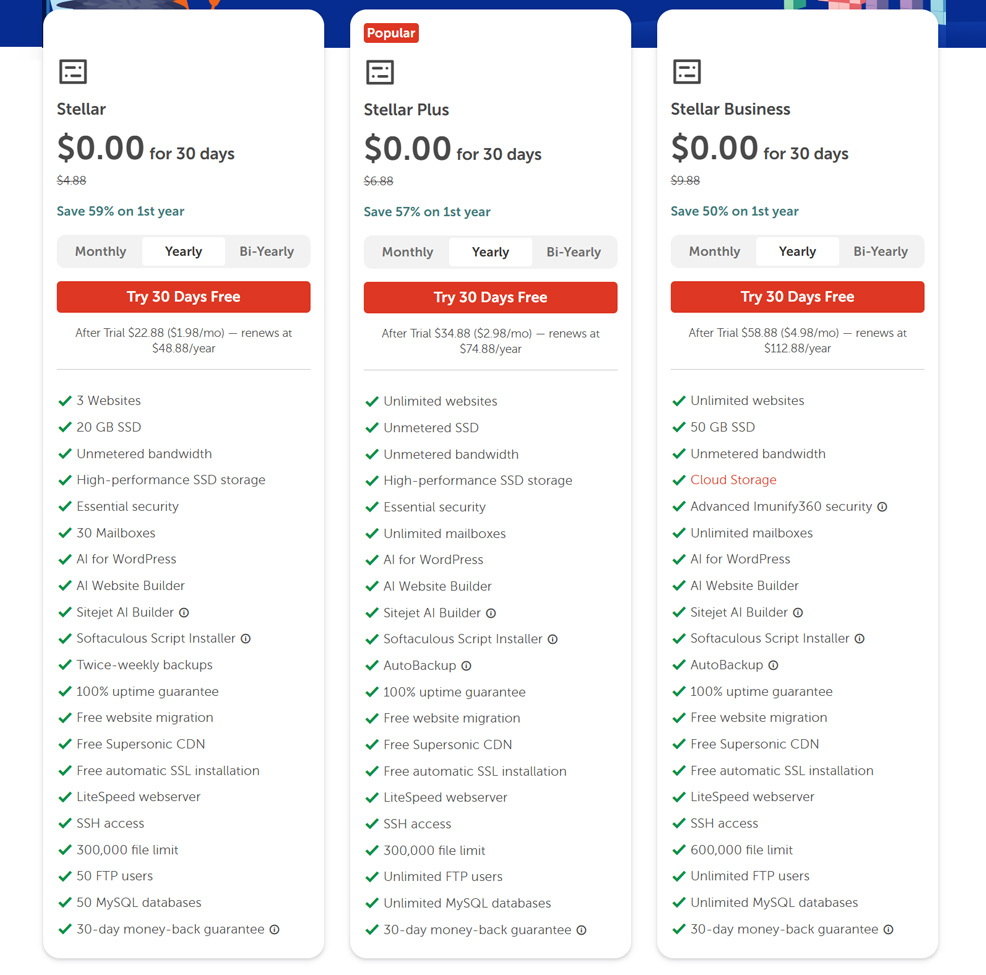
One of Namecheap’s biggest selling points is its low advertised entry price. At the time of writing, the Stellar shared hosting plan starts at about $1.98/month on promotional pricing, which places it among the more affordable recognizable hosting brands for basic websites. That makes it appealing to first-time site owners, side-project builders, and anyone who prioritizes a low upfront cost.
Renewal Pricing and Hidden Costs
This is where readers need to slow down and compare the actual long-term cost. Namecheap’s introductory pricing is attractive, but renewals are materially higher. The entry Stellar plan commonly renews at around $4.88/month, and higher shared or VPS tiers rise further from there. Like many hosts, Namecheap uses aggressive entry pricing to lower the barrier to signup, so shoppers should not mistake the promo price for the ongoing cost of ownership.
There are also other important differences between plans, including storage levels, website allowances, managed features, backup options, and the degree of server control. On VPS products, the headline price can also climb once you add management, backups, or commercial control panel licensing. In other words, Namecheap can be cheap, but the real value depends on matching the right plan to the right workload.
Value Assessment
For beginners, low-traffic sites, and users who mainly want affordable hosting tied to their domain registrar, Namecheap offers solid value. You can get online cheaply, the product range is broad enough to grow within the ecosystem, and the overall barrier to entry is low. For users who care more about premium support, stronger performance consistency, or the richest managed hosting experience, the value proposition is less compelling. Overall, Namecheap performs best when judged as a budget host rather than a premium one.
| Plan Tier | Starting Price | Key Resources | Best For |
|---|---|---|---|
| Stellar Shared | $1.98/mo | Low-cost shared hosting, SSD storage, free SSL on qualifying plans, beginner-friendly entry point | Personal sites, blogs, simple business sites |
| Stellar Plus / Business | $2.98-$4.98/mo | More storage, support for more sites, broader shared hosting capability for growing projects | Growing sites, small businesses, users needing more flexibility than the entry tier |
| VPS Hosting | $3.88/mo+ | Dedicated virtual resources, root access, stronger customization potential, multiple upgrade tiers | Developers, hobby apps, custom stacks, growing technical projects |
Pricing note: Many hosting providers advertise very low promotional rates that increase noticeably at renewal. Namecheap is inexpensive to start with, but the real comparison should always include renewal pricing and any required add-ons.
Ready to try Namecheap?
If your priority is low-cost hosting for a simple site, starter project, or small WordPress installation, Namecheap may be worth a closer look. Review the latest plans, features, and pricing directly on the provider’s site before signing up.
Performance and Speed
Performance is one of the more mixed parts of the Namecheap story. For simple websites, personal blogs, small WordPress installs, and low-traffic business sites, Namecheap’s shared hosting is generally good enough and often perfectly acceptable for the money. That is especially true when expectations are realistic and the site is not carrying a demanding plugin stack, a large ecommerce catalog, or heavy traffic volumes.
Where the platform becomes less compelling is when users expect premium performance from its lowest-cost plans. Consumer sentiment, especially in forums and Reddit discussions, often describes Namecheap hosting as serviceable rather than exceptional. Many users are satisfied for basic use cases, but others report slower performance, more noticeable shared-hosting limitations, or a feeling that the company is stronger at domains than at hosting infrastructure.
For smaller websites, that tradeoff may be entirely acceptable. For business-critical sites or workloads that need more consistent performance, a stronger shared host, cloud provider, or a better-tuned managed WordPress platform may be the safer choice. In short, Namecheap’s performance is adequate for many budget use cases, but it is not usually the main reason people choose the platform.
Ease of Use and Setup
Ease of use is one of Namecheap’s more practical strengths, especially for customers already using the company for domain registration. Managing domains, DNS, hosting, SSL, and related services in one account can simplify the setup process considerably, and that convenience matters for beginners who do not want to stitch together multiple providers.
On shared hosting, the overall experience is fairly familiar and accessible, especially for users comfortable with cPanel-style hosting environments. WordPress installation, basic site setup, domain connection, and SSL activation are generally not difficult. Namecheap is not the most polished platform in the market, but it is approachable enough for first-time users and small site owners who want a fairly standard hosting experience.
The main caution is that the simplicity is better described as functional than premium. Buyers looking for the smoothest onboarding, the most refined dashboard, or the most hand-holding may prefer more premium competitors. Still, for budget hosting, Namecheap’s ease-of-use profile is perfectly reasonable.
Developer and Advanced Features
Namecheap is not exclusively for beginners. Its VPS and dedicated offerings give more technically comfortable users room to customize environments, access root-level controls, and run projects that go beyond basic shared hosting. This makes it a workable option for developers, tinkerers, and small technical teams that want a low-cost place to host lightweight applications or custom web stacks.
That said, Namecheap is still better understood as a budget generalist than a developer-first infrastructure platform. If your project depends on advanced orchestration, platform engineering workflows, highly specialized cloud tooling, or deeply integrated deployment pipelines, there are better options. But for straightforward Linux-based projects, smaller client sites, and budget-conscious development work, Namecheap’s VPS ladder gives users a reasonably accessible upgrade path.
Its broader advantage here is variety rather than sophistication. There are enough products to move from basic hosting into more customized environments, but the company is not trying to be the most advanced cloud platform in the market.
Security, SSL, and Backups
Namecheap includes the security basics most site owners expect, including SSL support on qualifying hosting plans. That is important because even simple websites now need HTTPS to look credible and function properly in modern browsers. Depending on the hosting tier, users can also access different levels of backup protection, security tooling, and management options.
As with many budget hosts, the details matter. Not every plan includes the same backup frequency, the same bundled protections, or the same level of managed oversight. On more advanced products, users may also need to think more carefully about offsite backups, server hardening, and maintenance responsibilities rather than assuming the platform handles everything automatically.
For ordinary websites, Namecheap provides a workable baseline security foundation. For serious business use, the safer approach is to combine the host’s included protections with your own backup strategy, strong password hygiene, careful plugin management, and regular software updates.
Customer Support
Customer support is one of the more debated aspects of Namecheap hosting. Some users report perfectly fine experiences with live chat and ticket-based help, especially for routine tasks like DNS changes, setup questions, SSL issues, or simple hosting concerns. Budget-conscious buyers who mainly need occasional assistance may find the support experience adequate for the price.
However, consumer sentiment becomes more mixed once conversations shift from domains to hosting. A recurring theme in public reviews and Reddit discussions is that Namecheap support can feel inconsistent, especially when users are troubleshooting more technical hosting issues or expecting premium, high-touch help. This is one of the main reasons the platform tends to be viewed more favorably as a domain registrar than as a premium hosting company.
Overall, support is best described as acceptable for a budget provider, but not a standout selling point. If fast escalation, white-glove service, or consistently premium troubleshooting is a top priority, you may want to compare alternatives carefully.
Scalability and Flexibility
Namecheap does provide a workable upgrade path. A user can start on inexpensive shared hosting, move into a stronger shared tier, adopt EasyWP for a more managed WordPress setup, and later graduate into VPS or even dedicated hosting if the project becomes more complex. That is useful because it gives smaller websites a path to grow without immediately leaving the ecosystem.
Still, Namecheap’s scalability is better described as practical than seamless. It works well for moving from very small projects into modestly larger ones, but it is not the most polished platform for organizations that already know they need robust cloud architecture, premium managed hosting, or enterprise-grade operational support. The ecosystem is broad enough to expand within, but it is not necessarily the best long-term destination for every growing project.
Scalability takeaway: Namecheap gives users a sensible path from low-cost shared hosting to VPS and dedicated options, but it is best suited to gradual growth rather than highly demanding, enterprise-style scaling.
Data Centers and Global Reach
Namecheap supports hosting across multiple infrastructure regions, though the exact options vary by product type. For most users, the key point is that the company has enough geographic coverage to serve a broad customer base and to avoid feeling overly locked into a single region. That matters because server proximity can influence latency, page speed, and the general responsiveness your visitors experience.
For smaller websites, this level of reach is usually sufficient. For globally distributed applications, high-traffic ecommerce, or projects with strict regional infrastructure needs, you will want to verify the exact data center and deployment options available on the specific Namecheap product you are considering, since those details are more important at higher levels of scale and complexity.
In other words, Namecheap’s geographic footprint is useful, but the company’s main appeal is still affordability and convenience rather than world-class infrastructure breadth.
Who Is Namecheap Best For?
Best For
- Beginners launching a first website on a tight budget
- Users who already manage domains with Namecheap and want hosting in the same account
- Personal blogs, portfolios, brochure sites, and simple WordPress projects
- Developers or hobbyists who want inexpensive VPS options for testing or lightweight deployments
- Small businesses that need a practical, low-cost entry point rather than premium managed hosting
Not Ideal For
- Users who want top-tier performance from shared hosting
- Projects needing premium support or high-touch managed service
- Business-critical sites where uptime consistency and rapid escalation are especially important
- Organizations that need richer managed WordPress tooling or more advanced cloud infrastructure
Ready to try Namecheap?
If your priority is low-cost hosting for a simple site, starter project, or small WordPress installation, Namecheap may be worth a closer look. Review the latest plans, features, and pricing directly on the provider’s site before signing up.
How We Evaluated Namecheap
For this review, we considered Namecheap’s hosting plan structure, introductory and renewal pricing, available resources, overall ease of use, product breadth, developer flexibility, support options, backup/security posture, upgrade path, and overall value for the types of users most likely to shop in this part of the market.
We also considered broader reviewer sentiment and user-review patterns, including public discussion trends around shared hosting performance, VPS value, customer support consistency, and the recurring distinction between Namecheap’s strong reputation for domains and its more mixed reputation for hosting.
Scoring Breakdown
| Category | Score |
|---|---|
| Performance | 7.9/10 |
| Ease of Use | 8.5/10 |
| Pricing/Value | 9.1/10 |
| Features | 8.2/10 |
| Security/Backup | 7.9/10 |
| Support | 7.6/10 |
| Scalability | 8.4/10 |
| Overall | 8.3/10 |
Top Alternatives to Namecheap
If Namecheap does not seem like the right fit, readers may also want to consider alternatives such as Hostinger, SiteGround, and ScalaHosting. Hostinger is often a better fit for users who want a more polished beginner experience and stronger perceived value in low-cost hosting, SiteGround is a good option for users who want more premium support and a stronger managed feel, and ScalaHosting can appeal to users who want more VPS-oriented flexibility and a somewhat more performance-focused growth path.
Final Verdict
Namecheap is a good option for beginners, small site owners, side-project builders, and users who want inexpensive hosting from a company they may already trust for domains.
Its biggest strengths are affordability, convenience, and breadth of product options at the low end of the market. Its biggest weaknesses are more mixed consumer sentiment around hosting performance and support, plus the reality that its cheapest plans are best for modest projects rather than demanding or business-critical websites.
For many readers, that tradeoff will still make sense. If your goal is to launch a simple site without spending much, Namecheap can be a practical and cost-effective choice. If your priority is premium support, stronger shared hosting performance, or a more refined managed experience, you should compare alternatives before committing.
Ready to try Namecheap?
If your priority is low-cost hosting for a simple site, starter project, or small WordPress installation, Namecheap may be worth a closer look. Review the latest plans, features, and pricing directly on the provider’s site before signing up.
Frequently Asked Questions
Is Namecheap good for beginners?
Yes. Namecheap is a reasonable beginner option for people who want low-cost hosting, a fairly familiar setup process, and the convenience of keeping domains and hosting together in one account.
Does Namecheap offer VPS hosting?
Yes. In addition to shared hosting and managed WordPress options, Namecheap offers VPS hosting for users who need more control, dedicated resources, and root access.
Is Namecheap expensive?
At signup, usually no. Namecheap is one of the more affordable mainstream hosting brands. The bigger issue is that renewal pricing is higher than the heavily discounted promotional rate.
Does Namecheap include free SSL and backups?
It includes SSL on qualifying plans, and backup options vary by product and tier. As always, users should review the exact plan details rather than assuming every hosting package includes the same protections.
Who should choose Namecheap over competitors?
Namecheap is a strong choice for users who want to keep upfront costs low, especially if they already use the company for domains and want a simple, budget-friendly place to host a personal site, blog, or small business website.
Editorial note: Hosting plans, pricing, features, and policies can change over time. Before signing up, always confirm the latest details directly on the provider’s site.